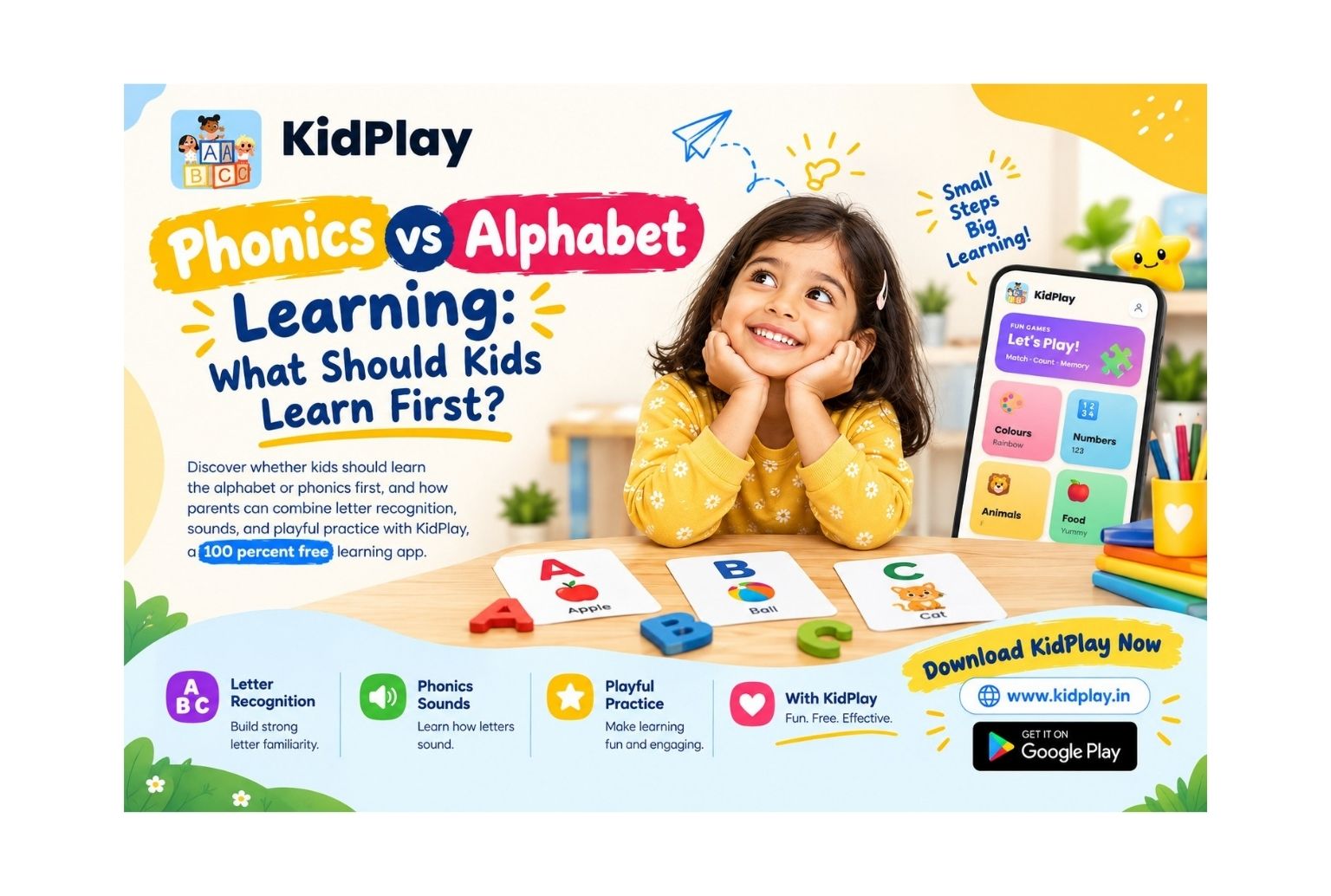
Parents often ask: Should children learn the alphabet first, or should they start with phonics? Both skills are valuable, but they develop different parts of early literacy. Alphabet learning helps children recognize and name letters, while phonics helps them understand the sounds connected to letters. Combining both can create a strong foundation for early reading.
What Is Alphabet Learning?
Alphabet learning means becoming familiar with the 26 letters of the English alphabet. Young children learn to recognize uppercase and lowercase letters, say letter names, identify letters in books, and eventually practice writing them.
Alphabet activities can include singing the ABC song, matching letters, tracing shapes, finding letters in everyday objects, and playing simple letter-recognition games. These activities make learning ABC for kids more familiar and enjoyable.
What Is Phonics Learning?
Phonics teaches children the relationship between letters and sounds. Instead of only knowing that a letter is called “B,” children begin to understand that B commonly represents the /b/ sound in words such as ball, bat, and bus. This awareness helps children move from recognizing letters toward reading simple words.
Phonics for preschoolers can include listening games, repeating sounds, matching letters with pictures, identifying beginning sounds, and blending simple sounds. Regular practice can help children become more comfortable connecting written letters with spoken sounds.
Should Kids Learn Alphabet or Phonics First?
There does not need to be a strict either-or choice. Many children can benefit from learning alphabet recognition and basic letter sounds together. Start with familiar letters and their names, then gradually introduce their sounds.
For example, once a child recognizes M, introduce its common sound and connect it to words such as moon, mango, or milk. This makes the connection between the letter, its sound, and familiar vocabulary easier to understand.
How Parents Can Combine Alphabet and Phonics Practice
Begin by showing one letter and saying its name. Then say its common sound and introduce a familiar picture or word. Ask your child to repeat the sound, find the same letter elsewhere, and identify another word beginning with that sound.
Parents can also use storybooks, rhymes, letter tracing, flashcards, matching games, songs, and interactive activities. Keep practice sessions short, playful, and positive. Repetition is useful, but children do not need to master everything in one sitting.
KidPlay can complement this routine by giving children an engaging way to explore foundational learning concepts. Families searching for a preschool learning app can use it alongside reading, conversations, drawing, and hands-on activities.
Start exploring KidPlay: KidPlay Website | Google Play
Why Choose Play-Based Learning?
Children often learn through repetition, exploration, and interaction. A kids learning app can complement offline learning by offering additional opportunities to practice familiar concepts. For families looking for a 100 percent free learning app, KidPlay offers an accessible way to include early learning activities in a child’s daily routine.
A 100 percent free app for kids can be particularly useful for parents who want to introduce educational screen time without making learning feel overly formal. However, apps work best as one part of a broader learning experience that includes books, conversations, creative activities, and play.
FAQ
1. Should phonics be taught before the alphabet?
Children can learn basic alphabet recognition and phonics together. Introducing letter names and then connecting them with common sounds is a practical approach for many young learners.
2. What age should children start learning phonics?
Readiness varies from child to child. Parents can introduce simple sounds when children show interest in letters and spoken words, keeping activities age-appropriate and pressure-free.
3. Is alphabet learning enough for reading?
Alphabet recognition is important, but reading also requires sound awareness, vocabulary, listening skills, comprehension, and practice connecting sounds to written words.
4. Can a learning app help with phonics and alphabet practice?
Yes. Interactive activities can provide repetition and engagement. Parents can combine app-based practice with books, conversation, writing, and hands-on learning.
5. Is KidPlay suitable for preschool learning?
KidPlay is designed to support early learning through playful activities. Parents can use it as part of a routine that includes reading, conversation, and offline practice.
<a href="https://play.google.com/store/apps/details?id=com.kidplay">Start Early Learning with KidPlay</a>
Alphabet recognition and phonics do not need to compete. Together, they can help children build early literacy skills step by step. Keep learning playful, repeat concepts regularly, and give children time to progress at their own pace. A few minutes of enjoyable daily practice can build familiarity without making early learning feel like homework.
Explore the KidPlay Website or download KidPlay on Google Play. Give your child a fun way to explore letters, sounds, numbers, and more with a 100 percent free learning app designed to make early learning engaging and accessible.