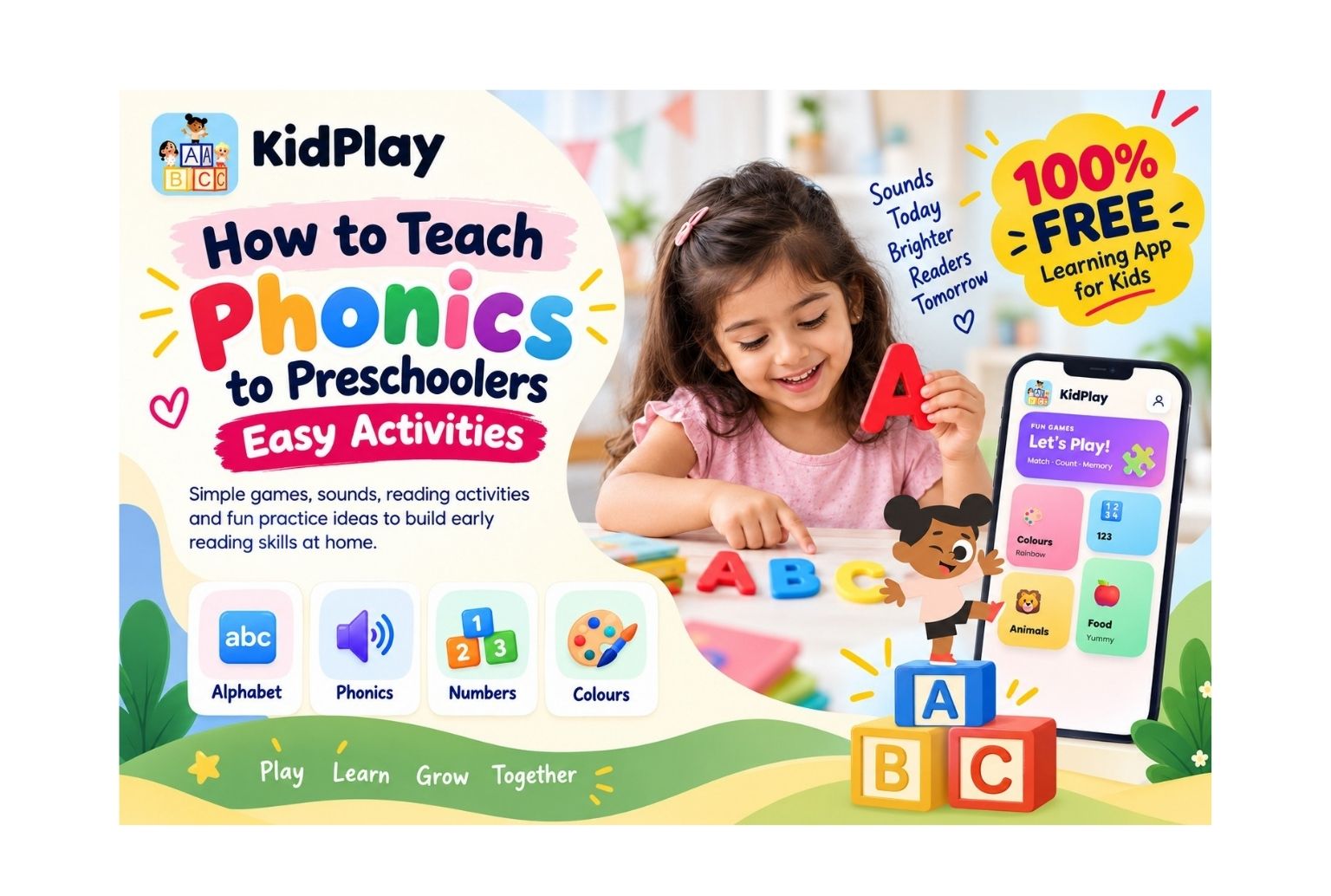
How Can I Teach Phonics to My Preschooler?
Learning to read begins long before a child reads their first book independently. For preschoolers, one of the most important early literacy skills is understanding the relationship between letters and sounds. Phonics helps children recognise letters, connect them with their sounds and gradually understand how sounds come together to form words.
But how can parents teach phonics at home without making learning feel like a formal lesson? The answer is simple: make phonics playful, practical and consistent. Short activities repeated regularly can help preschool children develop confidence while keeping their natural curiosity alive.
START WITH LETTER SOUNDS
Begin with familiar letters rather than trying to teach the entire alphabet at once. Show your child a letter and clearly say its sound. For example, point to B and say, “B says /b/.” Ask your child to repeat the sound and then connect it to a familiar word such as “ball.”
Focus on the sound of the letter as well as its name. Children need plenty of opportunities to hear, recognise and repeat sounds before they can confidently use them while reading.
USE EVERYDAY OBJECTS
Your home can become a simple phonics classroom. Choose objects your child already knows and ask questions such as, “What starts with /m/?” You could use a mat, mug or marker as examples.
You can also play a sound-hunting game. Choose one sound and look around the room for objects beginning with that sound. This turns phonics practice into an active game and helps children understand that sounds are part of everyday language.
TRY RHYMING GAMES
Rhyming is another useful early literacy activity. Say simple pairs such as cat-hat, sun-fun or log-dog, and ask your preschooler whether the words sound alike at the end.
You do not need worksheets or complicated materials. Songs, nursery rhymes and silly made-up words can make this activity enjoyable. The goal is to help children listen carefully to sounds and notice patterns in spoken language.
PRACTISE BEGINNING SOUNDS
Once your child becomes comfortable with individual letter sounds, practise identifying beginning sounds in words. Show a picture of an apple and ask, “What sound do you hear at the beginning of apple?”
Keep the activity short. Five to ten minutes of focused practice can be more effective for a preschooler than a long session that becomes frustrating. Celebrate effort and gently correct mistakes rather than expecting perfect answers.
INTRODUCE SIMPLE BLENDING
Blending is an important step from knowing individual sounds to reading simple words. Start with very short words such as cat, sun, dog or map.
Say the sounds slowly: /c/ /a/ /t/. Then encourage your child to say them together: cat. At first, children may need repeated practice before blending feels natural. Patience is important because every child develops early reading skills at a different pace.
MAKE PHONICS INTERACTIVE
Preschool children often learn best when they can see, hear, touch and respond. Digital learning activities can complement hands-on games by providing additional opportunities to recognise letters, sounds and early literacy concepts.
KidPlay is designed to make early learning engaging through interactive, age-appropriate activities for young children.
Parents can use it alongside conversations, reading books, drawing, songs and real-world play rather than treating screen-based learning as the only learning method.
Download KidPlay now from Google Play: https://play.google.com/store/apps/details?id=com.kidplay
Explore KidPlay on the official website: https://kidplay.in/index.html
KidPlay is a 100 percent free app, making it a convenient option for parents looking for accessible digital learning activities for children.
BUILD A SIMPLE DAILY ROUTINE
Consistency matters more than long study sessions. Set aside a few minutes each day for phonics. You could spend Monday practising letter sounds, Tuesday playing a rhyming game, Wednesday identifying beginning sounds and another day practising simple blending.
Combine these activities with storytime. When reading a picture book, point out familiar letters, ask your child what sound a letter makes or find words beginning with a particular sound. This helps children connect phonics with real reading.
Looking for an easy way to add interactive learning to your child’s routine? Explore KidPlay and discover activities designed to make early learning more engaging: https://play.google.com/store/apps/details?id=com.kidplay
FREQUENTLY ASKED QUESTIONS ABOUT TEACHING PHONICS
What is the best age to start phonics?
Many children can begin developing phonics awareness during the preschool years. Start with simple sounds, songs, rhymes and letter recognition, keeping activities appropriate for your child’s development.
How long should preschoolers practise phonics?
A short daily session of around five to ten minutes can be enough. The most important thing is regular, enjoyable practice rather than lengthy lessons.
Should I teach letter names or sounds first?
Children need to know both letter names and sounds. When introducing phonics, give particular attention to the sounds letters represent because sound knowledge supports early word reading.
Can I teach phonics without worksheets?
Absolutely. Songs, picture books, household objects, movement games, rhyming activities and interactive learning apps can all support phonics development.
Can an app help my child learn phonics?
Yes. A suitable preschool learning app can provide additional interactive practice. For best results, combine digital activities with reading, conversation and hands-on play.
Teaching phonics does not have to be complicated. With short, playful activities and regular encouragement, parents can help preschoolers build strong early literacy foundations at home. Make learning enjoyable, follow your child’s pace and celebrate small achievements along the way.
Ready to make phonics practice more engaging? Download KidPlay now on Google Play or visit the official KidPlay website and bring interactive early learning into your child’s daily routine.
Google Play: https://play.google.com/store/apps/details?id=com.kidplay
KidPlay Website: https://kidplay.in/index.html