Does your three-year-old point at pictures but struggle to name familiar objects? Are you wondering how to improve your child's vocabulary, observation skills and understanding of everyday things?
At age three, children learn naturally through play, repetition and exploration. Recognising pictures and objects helps develop early language, memory, attention and communication skills. Parents can encourage these abilities using household items, colourful picture cards and interactive learning games.
The best approach combines real-world experiences with short, enjoyable activities. Here is a practical guide to teaching object and picture recognition at home.
Why Is Object Recognition Important for 3-Year-Olds?
Object recognition helps toddlers connect what they see with words and meanings. When children identify an apple, ball or animal, they practise observation and vocabulary simultaneously.
Regular picture recognition activities can support:
- Vocabulary development and clearer communication
- Visual memory and observation skills
- Object identification and categorisation
- Early problem-solving and matching abilities
- Confidence in recognising familiar surroundings
Children develop at different speeds, so parents should focus on participation rather than perfect answers.
7 Easy Object Recognition Activities for 3-Year-Olds
1. Start With Familiar Household Objects
Introduce five everyday objects, such as a spoon, cup, ball, book and shoe.
Show each object, pronounce its name clearly and encourage your child to repeat it. Then ask simple questions like, "Where is the cup?" or "Can you find your shoe?"
Repeat the activity during normal household routines.
2. Use Picture Cards for Visual Learning
Picture cards featuring animals, fruits, vegetables and vehicles make recognition enjoyable.
Show one picture at a time and explain its name. Encourage your child to identify the picture independently.
For example:
- Apple: A red or green fruit
- Cat: An animal that says meow
- Car: A vehicle used for travelling
- Chair: Something we sit on
Use familiar pictures before introducing unfamiliar objects.
3. Try Picture-to-Object Matching
Place three real objects beside their corresponding picture cards.
Ask your toddler to match each picture with the correct object.
For example, match a toy car with a car picture or a banana with its photograph.
This activity strengthens visual association and understanding.
Turn everyday surroundings into learning opportunities.
Ask your child to find something round, identify a favourite toy or point towards a familiar animal in a picture book.
Celebrate their efforts and provide gentle guidance when necessary.
5. Introduce Colours and Shapes
Teach basic colours using familiar objects.
Show a yellow banana, red ball or blue cup. Introduce circles, squares and triangles through toys and household materials.
Combining colours, shapes and object names supports broader visual recognition.
6. Explore Interactive Picture Games
Age-appropriate digital activities can complement hands-on learning when parents participate.
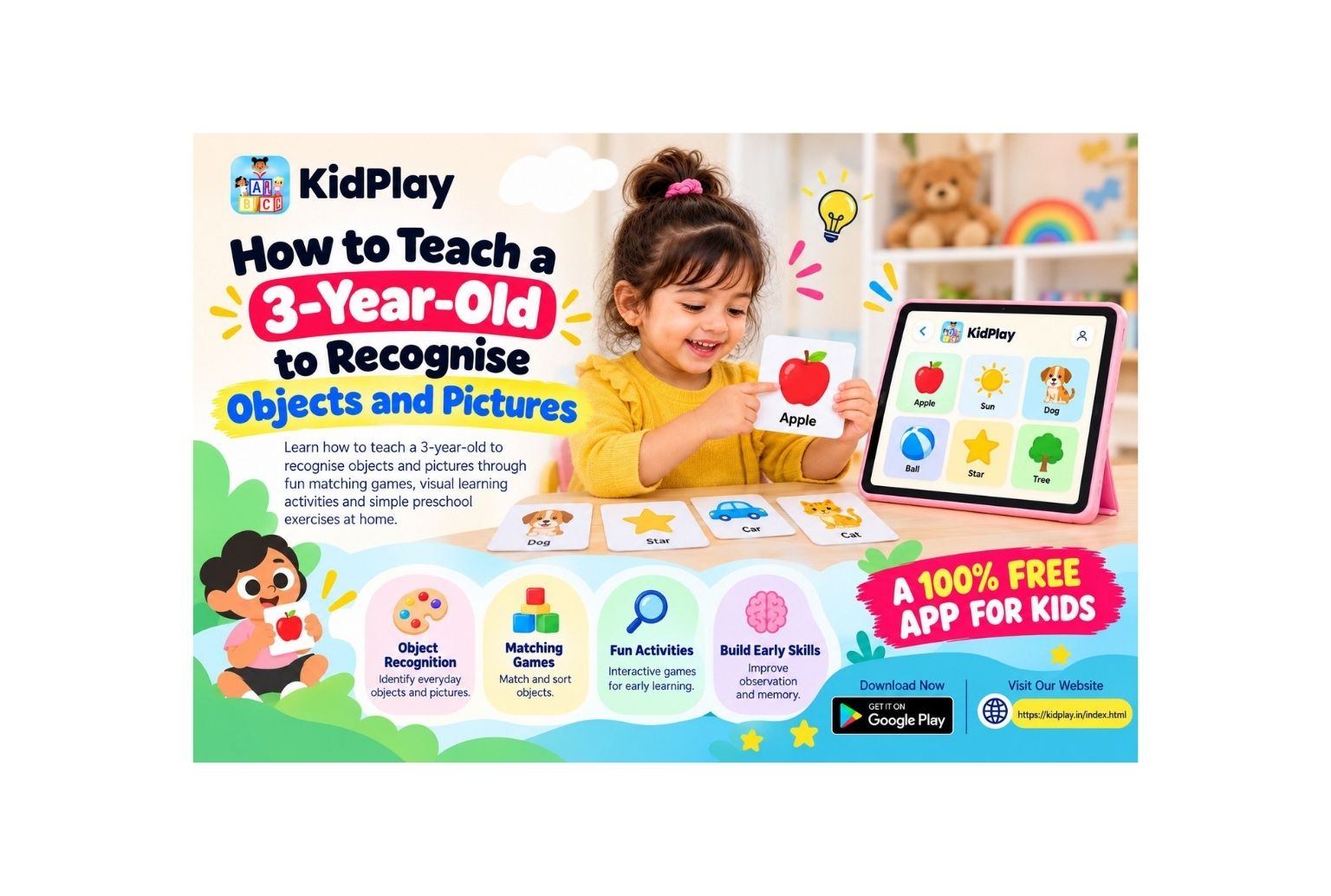
KidPlay is a 100 percent free app designed to introduce young children to early learning concepts through engaging activities.
Parents can explore picture-based vocabulary, colours, shapes, numbers and other preschool learning experiences.
Download KidPlay Now: Visit the KidPlay Website | Download KidPlay on Google Play
7. Read Picture Books Together
Choose books containing large, clear illustrations of everyday objects.
Point towards each picture, name the object and encourage your child to describe what they notice.
Ask questions such as, "What animal is this?" and "Where have you seen it?"
Reading together supports vocabulary, listening and recognition.
Daily Object Recognition Routine for Toddlers
A simple fifteen-minute routine can make learning manageable.
| Time | Activity |
| 3 minutes | Identify household objects |
| 4 minutes | Match pictures with objects |
| 3 minutes | Practise colours and shapes |
| 3 minutes | Explore picture books |
| 2 minutes | Review familiar vocabulary |
Adjust the routine according to your child's interest and attention.
Frequently Asked Questions
1. How do I teach my 3-year-old object recognition?
Start with familiar household objects, introduce picture cards and practise matching activities through playful repetition.
2. What pictures should a 3-year-old recognise?
Begin with common animals, fruits, vegetables, toys, vehicles, body parts and household objects.
3. Are picture matching games helpful for toddlers?
Yes. Matching games encourage observation, visual association, vocabulary development and early problem-solving skills.
4. Can educational apps help with picture recognition?
Age-appropriate educational apps can supplement physical activities, especially when parents guide learning and balance screen time.
5. How long should toddlers practise daily?
Several short, enjoyable sessions work well. Follow your child's attention and avoid forcing activities.
Conclusion
Teaching a three-year-old to recognise objects and pictures does not require expensive materials or complicated lessons. Familiar toys, household items, picture books and simple matching games create meaningful learning opportunities.
Consistency, encouragement and playful interaction help children gradually develop vocabulary, observation and recognition skills.
For additional preschool activities, explore KidPlay's interactive learning resources alongside everyday play.
Download KidPlay Now: Explore the KidPlay Website | Get the Free KidPlay App on Google Play