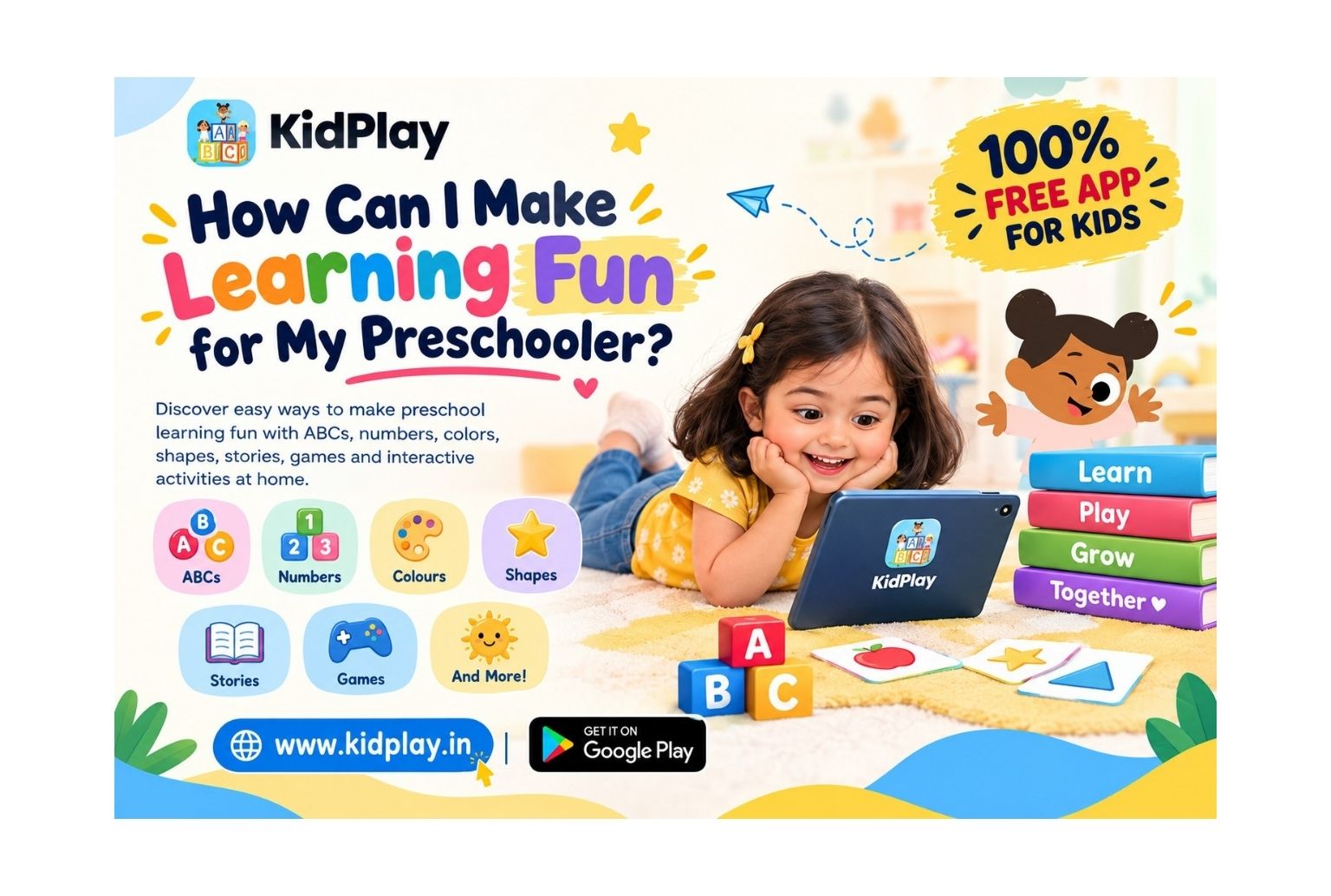
How Can You Make Learning Fun for a Preschooler?
Make learning feel like play—not studying. Parents can make preschool learning more enjoyable by:
• 🎲 Turning ABCs and numbers into simple games
• 🎨 Teaching colors and shapes through drawing and play
• 📚 Making storytime interactive with questions and imagination
• 🏃 Adding movement, songs and hands-on activities
• 📱 Using age-appropriate educational apps for interactive practice
• ⏱️ Keeping activities short, varied and pressure-free
The goal is simple: help your child learn while having fun. When children can explore, move, play and ask questions, everyday activities can become valuable learning opportunities.
1. Make ABC Learning a Game
Alphabet learning becomes more enjoyable when children connect letters with familiar objects. Choose one letter and ask your child to find objects around the house that begin with it. For example, after introducing “B,” ask them to find a ball, book or bottle.
You can reinforce the concept with alphabet songs, matching activities and picture-based exercises. After practising a letter digitally, encourage your child to find the same letter in a book or around the house. This connects learning with the real world.
2. Make Numbers Part of Everyday Life
Early maths does not need complicated worksheets. Ask your preschooler to count toys, blocks, fruits or steps. You can also introduce simple comparisons by asking which group has more or fewer objects.
For example, give your child three blocks and add two more. Ask them to count everything again. These simple early learning activities help children understand numbers through familiar situations.
3. Explore Colors and Shapes Through Play
Turn colors and shapes into a treasure hunt. Ask your child to find three red objects, something blue or an item that is round. You can also use crayons and drawing activities to practise different colors and shapes.
Once children learn a concept, encourage them to identify it around the home. This makes learning active and helps them understand how these concepts appear in everyday life.
4. Make Storytime Interactive
Stories can help develop vocabulary, listening, imagination and communication skills. Instead of simply reading a story, pause and ask what your child thinks will happen next. Talk about the characters and pictures, and encourage your preschooler to describe what they see.
After the story, ask your child to retell it or create a different ending. Acting out a favorite character can make reading even more engaging.
5. Add Interactive Digital Learning
Digital resources can complement books, creative play and hands-on activities. KidPlay gives parents an accessible option for adding interactive early-learning activities to a child’s routine.
For example, parents can introduce a number through an interactive activity and then ask the child to count toys. After practising colors, children can search for matching objects around the house. After learning letters, they can find the same letter in a favorite book.
Explore KidPlay or download the app from Google Play to add interactive learning to your child’s routine.
6. Keep Learning Short and Engaging
Preschoolers generally respond better to short activities than lengthy study sessions. Introduce one concept at a time and allow regular breaks. A few minutes of alphabet practice can be followed by drawing, counting, outdoor play or storytime.
Keeping activities varied prevents learning from becoming repetitive. The goal is to create enjoyable learning opportunities throughout the day rather than expecting young children to study for hours.
7. Combine Learning With Movement
Movement can turn simple lessons into games. Ask your child to jump five times while counting, find something blue in the room or collect four toys. Alphabet songs and action games can also combine physical activity with learning.
These activities reinforce basic concepts while allowing children to move and explore. They are particularly useful when children need a break from sitting or screen-based activities.
8. Encourage Effort and Curiosity
Praise your child’s effort instead of focusing only on correct answers. Phrases such as “Great try!” and “Let’s solve it together” can help build confidence and encourage children to keep trying.
Questions are also valuable learning opportunities. When your preschooler asks why something happens or what a word means, use the moment to start a conversation. Curiosity can turn ordinary situations into meaningful learning experiences.
9. Create a Balanced Learning Routine
A good preschool routine should include books, outdoor play, drawing, puzzles, building blocks, music, conversations and digital learning. Educational technology should complement these experiences rather than replace them.
A simple routine could include a short interactive learning activity followed by drawing, physical play or reading. This gives children different ways to practise concepts while keeping their day interesting.
Why Is Learning Through Play Important?
Learning through play makes education feel natural and enjoyable. Games, stories, creative activities and everyday experiences allow children to practise skills without unnecessary pressure. Parents looking for an educational app for children can combine digital resources with hands-on activities to support learning at home.
The most effective approach is to create a balanced environment where children can learn through play, interaction, exploration and repetition.
Frequently Asked Questions
How can I make learning fun for my preschooler?
Use games, songs, stories, drawing, counting, puzzles, movement and interactive activities. Keep sessions short and let your child explore at a comfortable pace.
What are good preschool learning activities at home?
Counting toys, identifying letters, finding colors and shapes, reading stories, drawing, sorting objects and movement-based games are simple activities parents can use at home.
Are educational apps useful for preschoolers?
Yes. Age-appropriate learning apps can provide interactive practice and reinforce basic concepts when used alongside books, creative play, physical activities and parent-child interaction.
Is KidPlay a 100 percent free app for kids?
KidPlay is presented as a 100 percent free app that provides children with access to interactive early-learning activities.
Where can parents access KidPlay?
Parents can visit the official KidPlay website or download KidPlay from Google Play.
Make Learning Fun Every Day
Learning does not have to feel like formal studying. Letters can become games, numbers can become counting challenges, colors can become treasure hunts and stories can become imaginative adventures. Combining these activities with suitable digital resources can make preschool learning simple, engaging and enjoyable.
Ready to make learning more enjoyable? Visit KidPlay or download the app from Google Play and make learning through play part of your preschooler’s day.