Make Learning Fun from the Start
Teaching ABCs, numbers and phonics becomes much easier when children enjoy the process. Young children learn naturally through play, repetition, movement and exploration. Instead of making learning feel like a classroom task, parents can introduce educational concepts through simple games, songs, stories and everyday activities.
A fun learning routine can help children recognise letters, understand numbers and develop early phonics skills while keeping them interested. Digital learning can also be included as part of this routine, especially when children use an interactive and engaging 100 percent free app alongside offline activities.
Fun Ways to Teach ABCs
Alphabet learning can begin with simple games. Use colourful alphabet cards and ask your child to identify individual letters. Once they become familiar with a letter, connect it with a familiar word or object, such as A for Apple, B for Ball and C for Cat.
An alphabet treasure hunt can make this activity even more exciting. Choose a letter and ask children to find objects around the house that begin with that sound. Parents can also use alphabet puzzles, colouring activities and ABC songs to encourage letter recognition.
Another useful activity is matching uppercase and lowercase letters. These activities do not require complicated materials and can easily become part of a child’s daily playtime.
Make Number Learning Interactive
Children can learn numbers through activities they already enjoy. Ask them to count toys, blocks, books, fruits or steps around the house. This helps them understand that numbers represent real quantities.
Number matching is another simple activity. Show a number such as 5 and ask your child to place five blocks or toys beside it. Counting songs and number puzzles can also make early maths practice more enjoyable.
Parents can gradually introduce simple concepts such as more and less, before and after, and basic addition using everyday objects. Keeping activities practical and playful can help children understand numbers without feeling pressured.
Introduce Phonics Through Sounds
Phonics helps children connect letters with the sounds they represent. Start with familiar words and simple sounds. For example, introduce the sound of B through words such as ball, bat and banana.
Picture cards can make phonics practice more interactive. Show your child a picture and ask which sound they hear at the beginning of the word. You can also say different words and ask children to identify which ones begin with the same sound.
Reading picture books together is another effective way to practise phonics. Point to familiar letters and sounds while reading and encourage children to repeat them. Regular exposure can gradually improve sound recognition and early reading skills.
Learn Through Songs, Stories and Movement
Children often enjoy learning more when they can sing, move and use their imagination. Alphabet songs, counting rhymes and phonics songs provide repetition without making the activity feel repetitive.
Movement can also be added to learning. Ask children to clap three times, jump five times or find an object beginning with a particular letter. Short stories can introduce letters, numbers and sounds through memorable characters and situations.
Combining different activities keeps learning fresh and gives children multiple ways to understand the same concept.
Support Early Learning with Kidplay
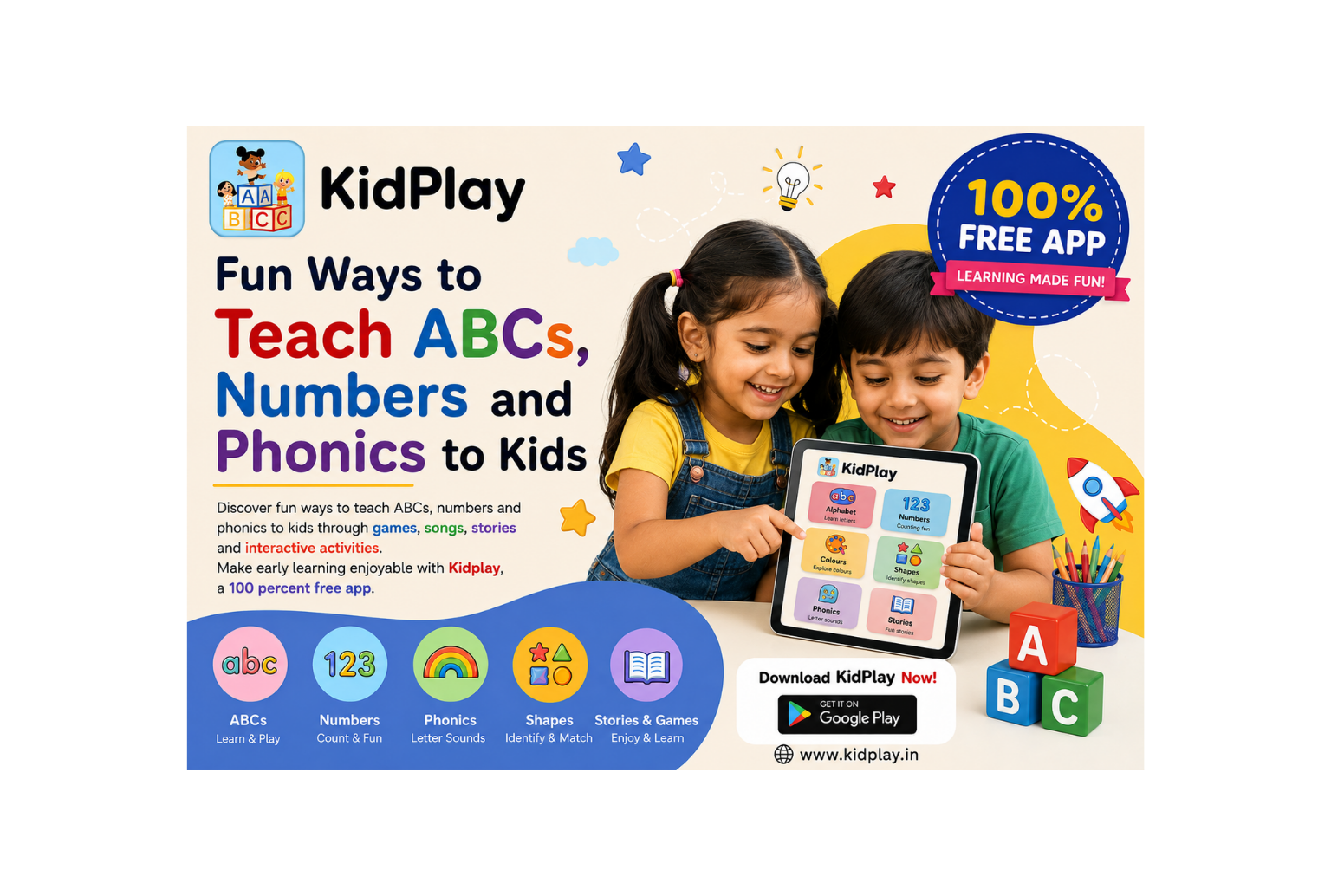
Parents looking for additional educational activities can include digital learning in their child’s routine. Kidplay is a 100 percent free app designed to make learning more engaging through interactive activities for young children.
Parents can use the app alongside books, creative play, conversations and hands-on activities. This balanced approach allows children to enjoy technology while continuing to learn through real-world experiences.
Download Kidplay now and explore fun learning activities:
Download Kidplay on Google Play Store
You can also visit the Kidplay website to explore more about the app.
Try Hands-On Learning Activities
Hands-on activities are a great way to reinforce ABC, number and phonics learning. Children can form letters using clay, trace them in sand or rice, or practise numbers with colourful pencils.
Parents can also create simple matching games using paper cards. Match a letter with a picture, a number with a group of objects, or a letter with its sound. These activities encourage children to participate actively rather than simply watching or listening.
Even five to fifteen minutes of focused learning can be useful when the activity is age-appropriate and enjoyable.
Keep Learning Positive
Every child learns at a different pace. Some children may quickly recognise letters, while others may need more practice with numbers or phonics. Parents should focus on progress instead of comparing children.
Celebrate small achievements and encourage children when they attempt something new. If a child makes a mistake, turn it into another opportunity to practise rather than making learning stressful.
A positive environment helps children develop confidence and curiosity. When children associate learning with fun, they are more likely to participate willingly.
Frequently Asked Questions
What is the best way to teach ABCs to kids?
Use alphabet songs, games, picture cards, puzzles and everyday objects. Connecting letters with familiar words can make alphabet learning easier.
How can I teach numbers to young children?
Use toys, blocks, fruits and other everyday objects for counting. Number matching, counting songs and simple games can make early maths enjoyable.
Why is phonics important for kids?
Phonics helps children understand the connection between letters and sounds. This provides an important foundation for early reading and word recognition.
Can learning apps help children learn ABCs and numbers?
Yes. Interactive learning apps can provide additional practice and make educational activities more engaging when combined with reading, play and real-world learning.
Is Kidplay a 100 percent free app?
Yes, Kidplay is promoted as a 100 percent free app that provides fun and engaging learning activities for children.
Start Your Child’s Learning Journey
ABCs, numbers and phonics can be taught in many fun and simple ways. Games, songs, stories, movement and hands-on activities can turn everyday moments into valuable learning opportunities.
If you are looking for a 100 percent free app for kids, Kidplay can be added to your child’s learning routine for additional interactive practice.
Download Kidplay now and make learning more enjoyable!
Download Kidplay from Google Play Store
Visit Kidplay Website
Kidplay — Learn, Play & Grow.