Learning the days of the week and months of the year is an important milestone in early childhood education. These concepts help preschoolers and kindergarten children understand time, recognise daily routines, remember special occasions and develop school-readiness skills.
Instead of simply asking children to memorise names, parents can introduce calendar concepts through movement games, songs, puzzles, storytelling and everyday conversations. Interactive activities encourage children to participate, think independently and remember what they learn.
What Are the Seven Days of the Week?
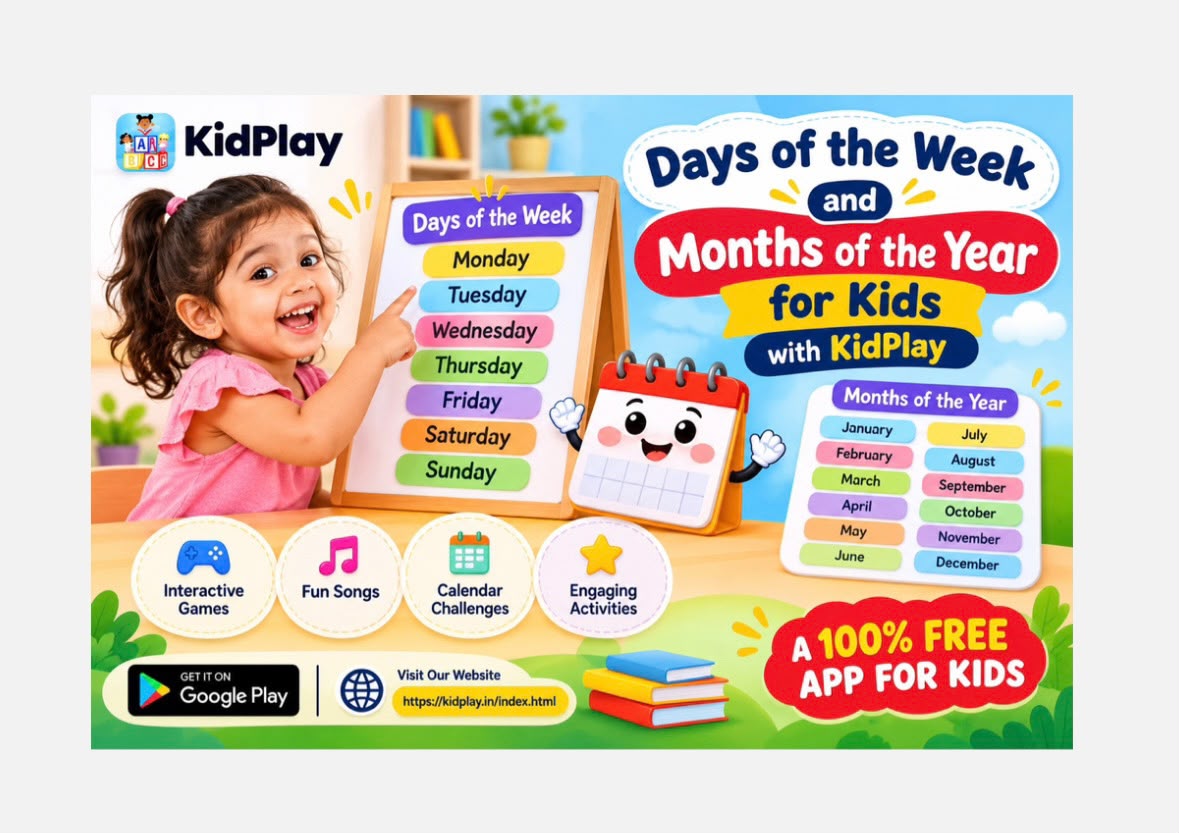
A week consists of seven days, arranged in the following order:
Explain that Monday follows Sunday and Sunday completes the weekly cycle. Show children a colourful calendar and ask, "What day is today?" or "Which day comes after Wednesday?"
Connect each day with familiar experiences, such as school days, weekend activities, hobbies and family outings. This helps children understand how the weekly sequence relates to their lives.
Interactive Games to Learn Days of the Week
Make learning enjoyable with activities that encourage children to listen, move, match and participate.
- Jump and Say Game: Call out a day and ask your child to jump once while saying its name. Continue with different days and gradually introduce the complete sequence.
- Pass the Calendar: Pass a soft toy between family members. Whoever receives it names the next day of the week.
- Missing Day Detective: Arrange seven day cards, secretly remove one and ask your child to identify which day is missing.
- Yesterday and Tomorrow Challenge: Ask questions such as, "If today is Friday, what was yesterday?" and "What comes tomorrow?"
- Day-of-the-Week Song: Sing the seven names together and clap whenever a new day is mentioned.
These playful challenges develop listening, memory, sequencing and language skills.
What Are the Twelve Months of the Year?
A year contains twelve months. Learning their names helps children understand birthdays, festivals, holidays, seasons and important occasions.
The twelve months are:
Children can also discover that months have different numbers of days. Most have 30 or 31 days, while February usually has 28 days and has 29 during a leap year.
Fun and Interactive Month-Learning Activities
Use colourful cards, pictures and everyday objects to make remembering the months exciting.
- Birthday Detective: Write family members' birthdays on cards. Ask children to match each birthday with its correct month.
- Month Puzzle: Mix twelve month-name cards and challenge your child to arrange them in the correct order.
- What's Missing?: Say January, February, March and skip April. Ask children to identify the missing month.
- Festival Match: Show pictures of familiar celebrations and discuss the months in which they occur.
- Spin and Answer: Make a simple month wheel. Let children spin it and name the month where the pointer stops.
- Calendar Treasure Hunt: Ask children to find a particular month on a calendar and point to its first day.
These games encourage observation, problem-solving and confidence while introducing important calendar vocabulary.
How Learning Apps Support Preschool Education
Digital learning can add variety to early education when balanced with offline games, storytelling and family conversations. Colourful visuals, interactive exercises and educational games introduce children to different concepts in an engaging way.
KidPlay is a 100 percent free app for kids offering early-learning content covering ABCs, numbers, colours, shapes, animals, stories, worksheets and interactive learning games. Parents can include these activities in a balanced daily learning routine.
Explore the KidPlay official website or download the app from Google Play.
Frequently Asked Questions
1. How many days are there in a week?
There are seven days: Monday, Tuesday, Wednesday, Thursday, Friday, Saturday and Sunday.
2. How many months are there in a year?
There are twelve months, beginning with January and ending with December.
3. What is an easy way to teach days of the week?
Use songs, jumping games, flashcards and calendar challenges to help children remember the sequence.
4. How can children remember all twelve months?
Month puzzles, birthday charts, matching games and calendar activities make learning easier and more enjoyable.
5. Can educational apps support preschool learning?
Yes. Age-appropriate educational apps provide visual and interactive activities that complement traditional learning and offline play.
Conclusion
Learning calendar concepts becomes more enjoyable when children actively participate. Songs, puzzles, movement games, birthday charts and interactive challenges help develop memory, vocabulary and sequencing skills.
Encourage your child to explore new concepts through playful everyday learning. Visit the KidPlay website or download the 100 percent free KidPlay app on Google Play to discover more activities covering letters, numbers, colours, shapes and other preschool essentials.